← All Expeditions
Fully Booked — Waitlist Open
Jyrgalan Valley, Kyrgyzstan
Tian Shan Ski Touring
Central Asia Ski Expedition · 14–22 March 2027
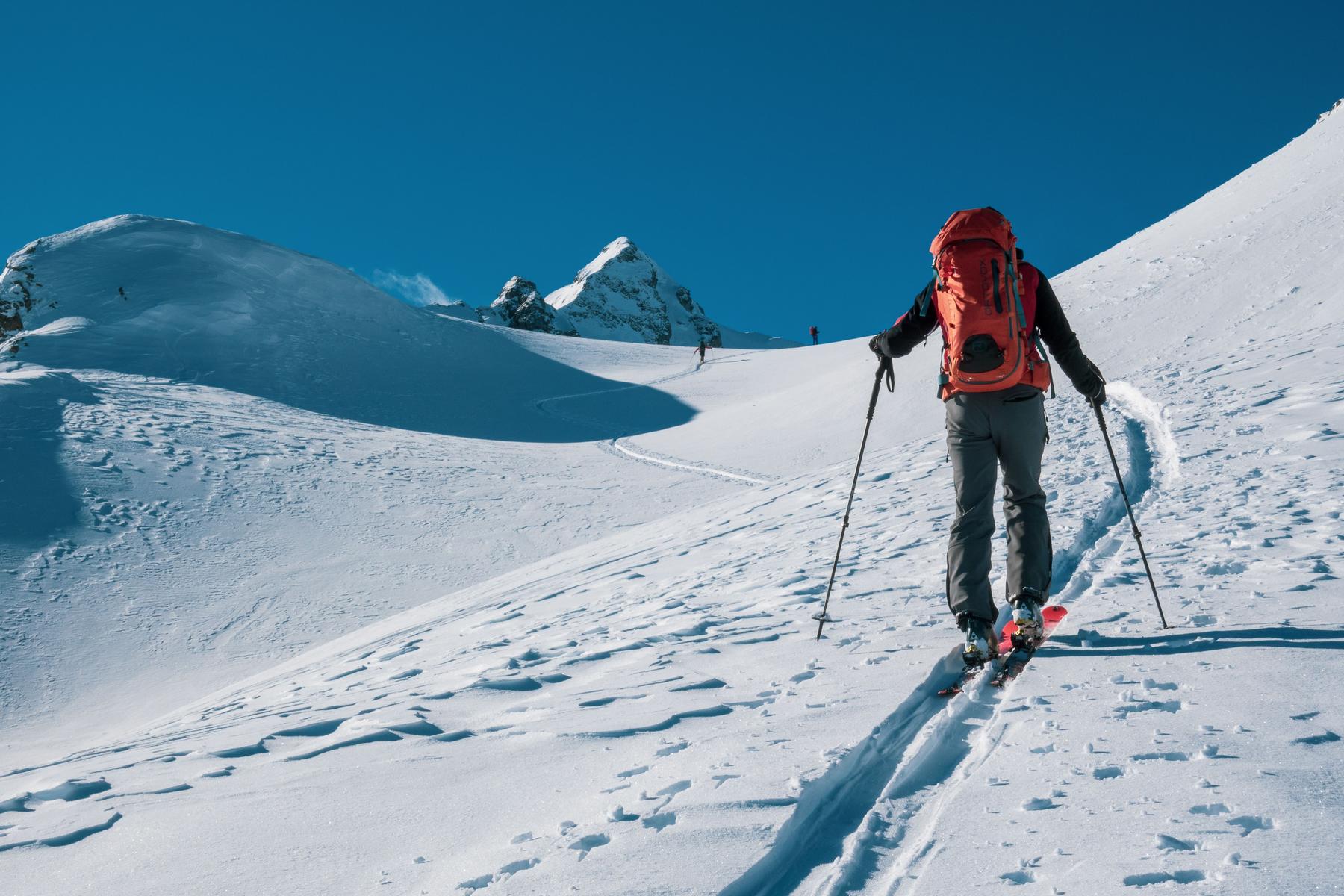
Nine days ski touring in one of Central Asia's most spectacular and unspoiled mountain environments. The Jyrgalan Valley sits in the heart of the Tian Shan range — a vast, largely untracked wilderness where the terrain is serious, the snow is reliable and the infrastructure is minimal by design. This is not a resort trip with an educational veneer. It is an expedition, run by people who live and work in these mountains, with CPD built into the fabric of it.
Each day starts early. IFMGA certified guides lead the touring — route selection, snowpack assessment, group management. You ski. Simulations run in the field during the day. In the evenings, the clinical programme runs: case discussions, short presentations, and journal club. The setting is a small, family-run guesthouse in the valley — comfortable, well-fed and genuinely remote.
This is not a wilderness medicine course. The CPD covers human factors, leadership, clinical decision-making and team dynamics — content that belongs in any high-quality programme, delivered in a setting that makes it land differently. A full day in demanding terrain, followed by an evening of honest clinical discussion, is a more effective learning environment than most clinicians have experienced.
This trip requires solid intermediate to advanced off-piste skiing ability. You do not need to be a ski mountaineer, but you need to be comfortable on ungroomed terrain in variable conditions. If you are unsure whether your skiing is at the right level, get in touch before registering — we would rather have that conversation early.
Not included: international flights, Kyrgyzstan visa, personal ski touring equipment and avalanche equipment (beacon, probe, shovel), personal travel insurance.
The clinical content runs across the nine days, woven around the touring day rather than bolted on at the end of it. Sessions run each evening — typically 2–3 hours, with longer structured blocks on lower-output days. Evening sessions rotate through case discussions, short presentations, and journal club. Simulations run out in the terrain during the day. No passive rows. No death by PowerPoint. A small group of engaged clinicians, a long day behind them, and no reason to be anywhere else.
Case discussions are the centrepiece. Participants are encouraged — though never required — to bring their own cases. The ones that didn't go to plan. The decision that felt right at the time and looks different in hindsight. As a group, we work through the clinical and human factors elements: what happened, what could have gone differently, and what that means for how we practise. These are the conversations that actually change things.
Simulations are run out in the terrain during the day — structured clinical scenarios in the field, followed by facilitated debriefs. The focus is not on what went wrong but on why, and on the decision-making patterns that drove it. The debrief is where the learning consolidates.
Presentations are kept short and deliberately opinionated. Not a systematic review, but a clinician telling you what they actually do and why — the gaps in the evidence, the decisions guidelines don't help with, the things that took years to learn and are worth saying plainly.
Journal club gives the week a thread of current literature. Selected readings are distributed ahead of departure and discussed in the group — not to cover everything, but to practise reading critically and asking what actually changes practice.
Human factors run as a thread through all of it. Decision-making under fatigue, situational awareness, team dynamics, cognitive load, the ways that stress shapes clinical judgement. Not a standalone module — a lens applied to every case, every simulation, every debrief. The expedition environment makes these themes concrete in a way that a classroom cannot.
All content is designed to meet ACEM, ACRRM, and equivalent international CPD requirements. International participants are encouraged to verify acceptance with their own college or certifying body. A detailed programme and pre-reading will be circulated to registered participants ahead of departure.
Participants receive a CPD certificate and activity log at the end of the programme. It is your responsibility to submit this to your college or certifying body. We will provide all documentation required to do so.
14–22 March 2027. The outline below reflects the programme structure; a detailed day-by-day schedule will be provided to registered participants.
This expedition is run in partnership with a small, specialist Kyrgyz guiding outfit based in the Jyrgalan Valley — one of the few operators with deep local knowledge of this terrain, established relationships with the communities there, and the infrastructure to run small-group ski expeditions properly. They are not a large commercial operator. They are a family-run outfit that has spent years building something genuinely good in a place that deserves to be shown correctly.
The booking, logistics and day-to-day operation of the mountain programme sit with them. OffChartCPD manages the clinical and educational programme. The combination is the point.
These conditions apply to all OffChartCPD expedition bookings. They exist to be transparent — about where your money goes, what happens if plans change, and what you need to have in place before you travel. Please read them before registering.
A deposit is required to secure your place. Deposits are paid to the trip operator — the specialist outfitter running the mountain or marine programme — and are used immediately to hold your accommodation, guiding, and logistics.
These are small, family-run operations. When we take your deposit, real commitments are made on your behalf. Please only book if you intend to travel.
Refund entitlement is governed by the operator's own booking conditions, which vary by operator and by how far in advance of departure a cancellation occurs.
In most cases, deposits are non-refundable. Partial refunds of subsequent payments may be available for cancellations made sufficiently in advance. The specific terms for each expedition will be provided at the time of booking. OffChartCPD cannot override operator refund policies.
This is why we require travel insurance.
If you are unable to attend, your booking can be transferred to another eligible participant. All transfers must be arranged through OffChartCPD — please do not make direct arrangements with other guests or the operator.
We will liaise with the operator to confirm eligibility and complete the transfer. Transfers may be subject to an administration fee and are not guaranteed in all circumstances.
All expeditions operate under the booking conditions of the respective trip operator. These will be provided to you in full before any payment is required.
By confirming your booking, you agree to be bound by both the OffChartCPD conditions on this page and the operator's own terms. If there is any conflict between them, the operator's terms take precedence on matters of refunds, cancellations and logistics.
Some expeditions are costed by the operator in a foreign currency. The price shown reflects the exchange rate at the time of publication.
In the event of a significant adverse currency movement between your deposit and the date OffChartCPD settles payment with the operator, OffChartCPD reserves the right to apply a reasonable surcharge to cover the shortfall. We will always notify you in writing before any surcharge is applied — minor fluctuations are absorbed by OffChartCPD as a matter of course.
All participants must hold comprehensive travel insurance before their place is confirmed. These expeditions travel to remote environments where medical evacuation can be complex, expensive, and time-critical. Insurance is not a formality — it is a clinical and financial necessity.
Your policy must include all three of the following:
We strongly recommend purchasing insurance at the time you pay your deposit — not closer to departure. Cancellation cover only protects you from the date the policy is active. If you book now and insure later, the period between is unprotected.
The specific policy is your choice. We do not endorse or receive any benefit from any insurance provider. If you are unsure what level of cover is appropriate for a high-altitude ski touring expedition in Central Asia, get in touch — we are happy to advise.